



SIGHTINGS 2025-2027
Decorum
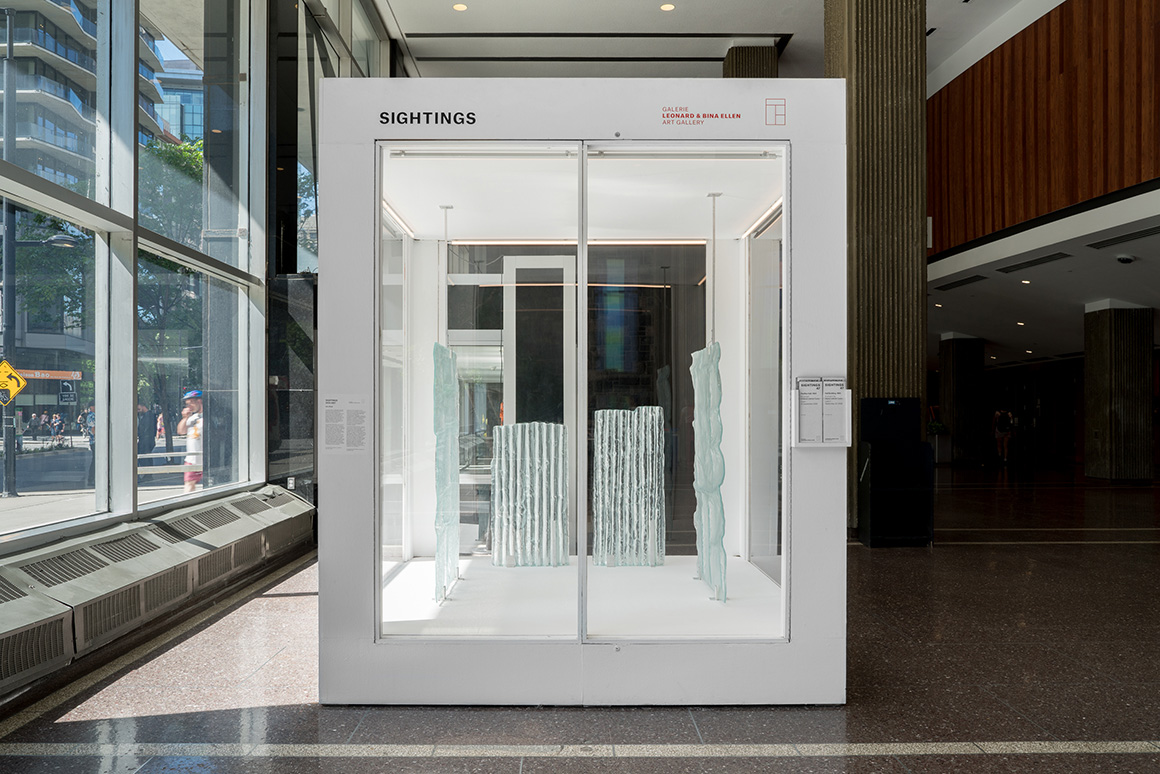
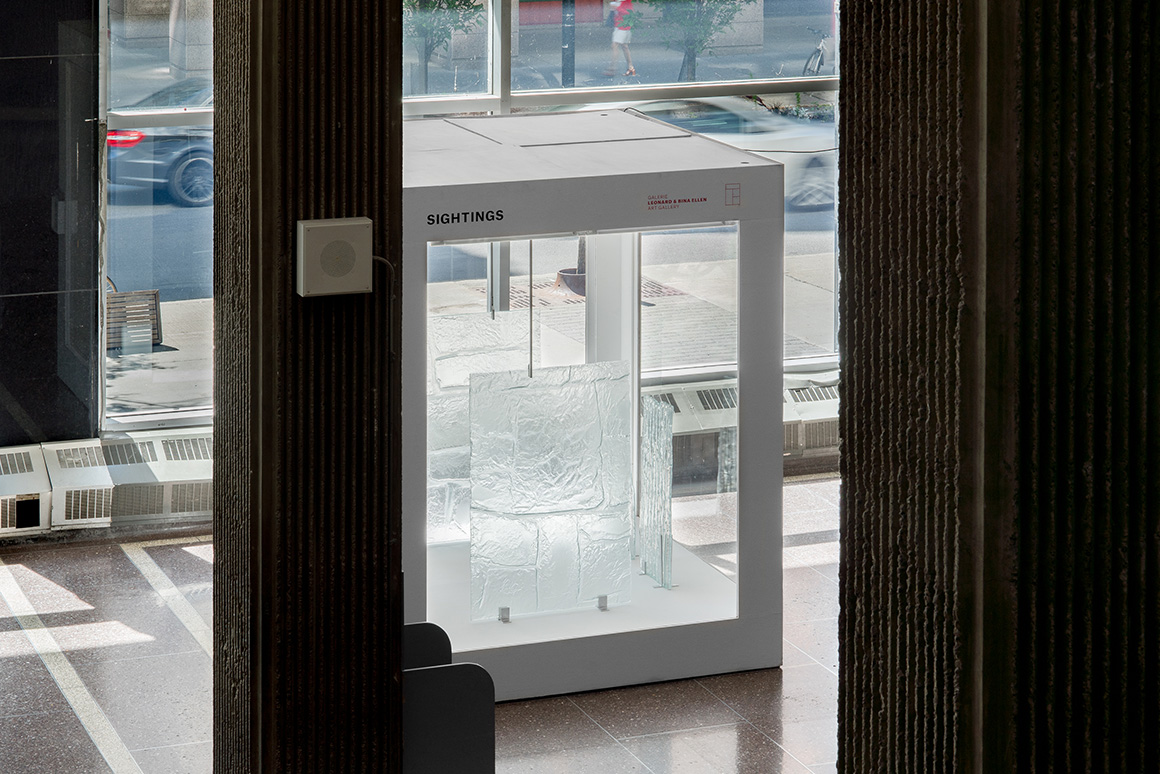
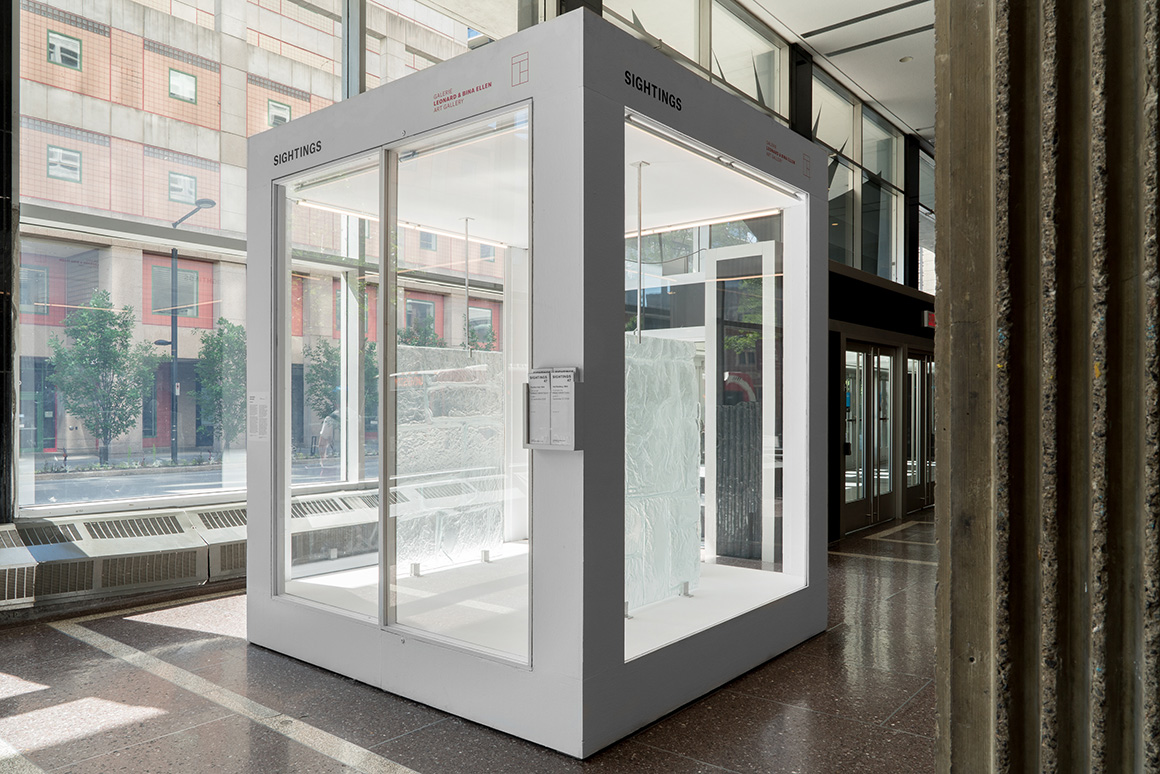
Launched in 2012 in celebration of the 50th anniversary of the Leonard & Bina Ellen Art Gallery’s Permanent Collection, the SIGHTINGS satellite exhibition program was conceived as an experimental platform to critically reflect upon the possibilities and limitations of the modernist “white cube.” As part of this program, artists and curators are invited to develop projects for a cubic display unit located in a public space at the university, with the aim of generating new strategies for art dissemination.
The 2025-2027 SIGHTINGS cycle, Decorum, engages with the emancipatory histories of Concordia University’s Henry F. Hall Building. Since its inauguration in 1966, the building has been a key site for student activism—from the 1967 lobby sleep-in protest against high textbook prices, where 150 students camped in the lobby, to the landmark 1969 Sir George Williams Affair, marked by a multi-day occupation of the 9th-floor Computer Centre by students and demonstrators to denounce racist grading practices. Originally conceived as a central hub for the downtown student body, the Hall Building remains a space where students gravitate to exchange ideas, mobilize and make their voices heard. The projects presented in SIGHTINGS build on this legacy, reflecting on the memory of protest embedded in institutions and their architecture.
SIGHTINGS is located on the ground floor of the Hall Building: 1455, blvd. De Maisonneuve West and is accessible weekdays and weekends from 7 am to 11 pm. The program is developed by Julia Eilers Smith.
HALL BUILDING, 1964
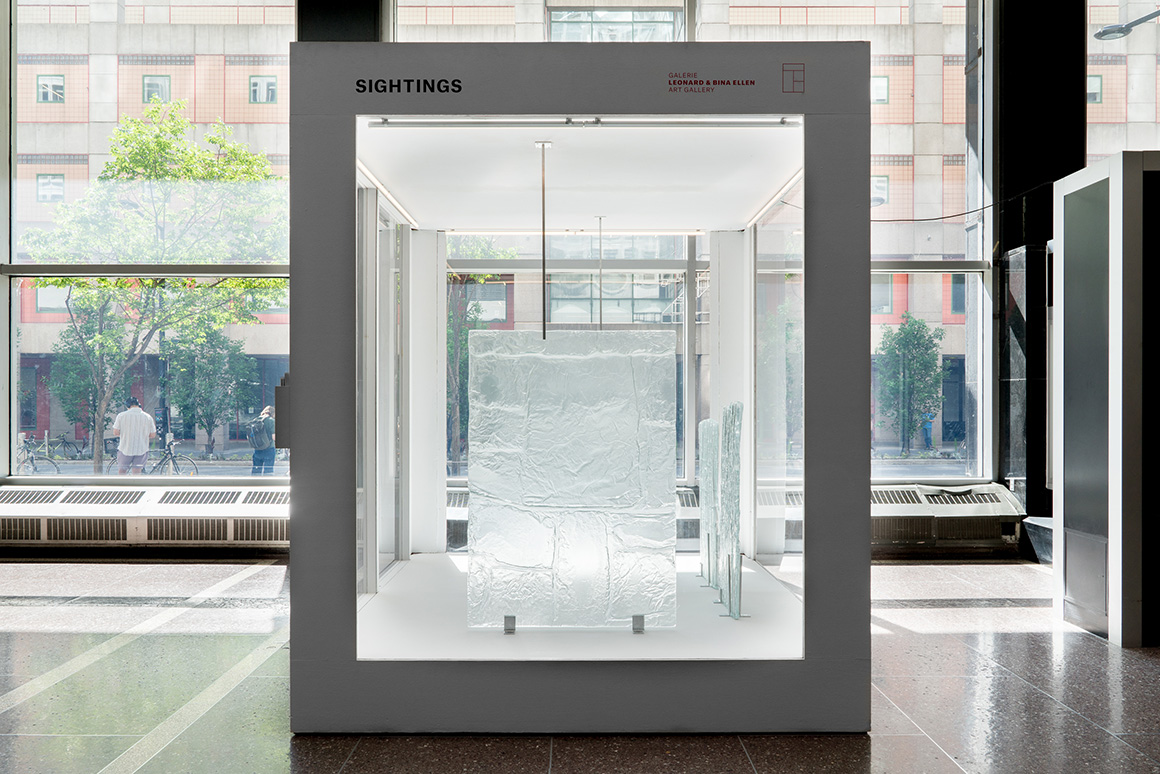
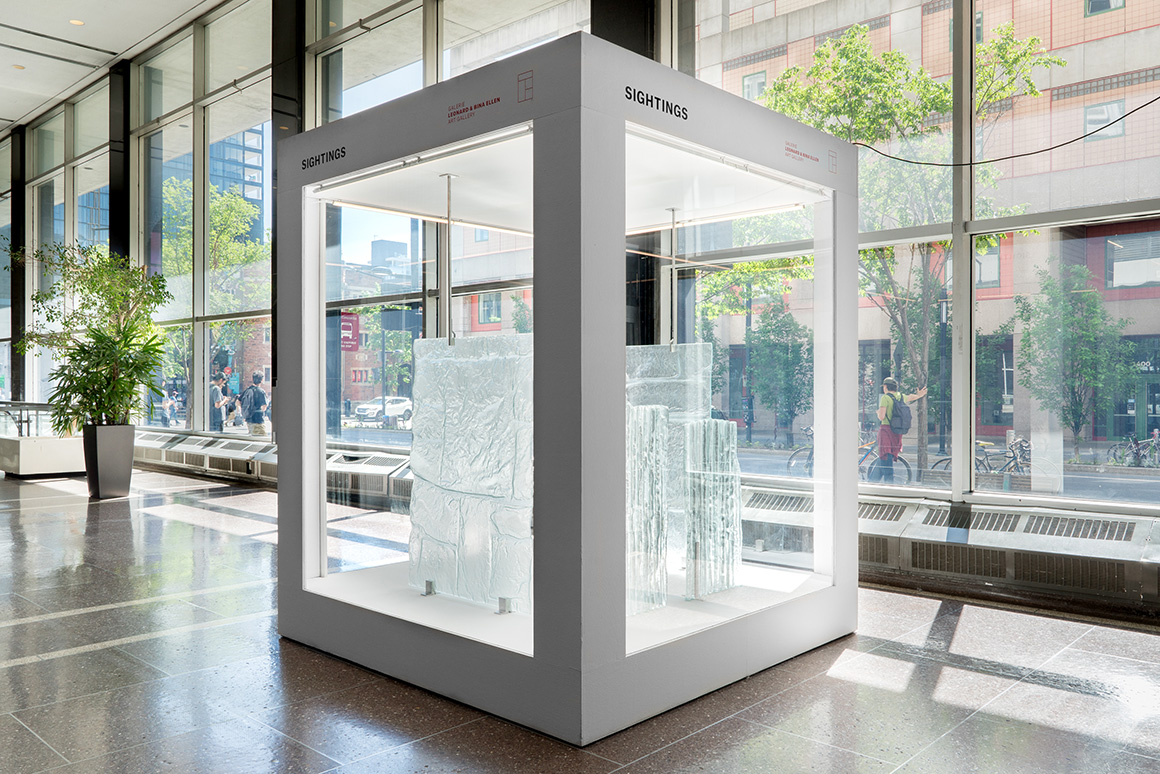


June 3 – October 29, 2026
A project by Alexia Laferté Coutu
Alexia Laferté Coutu (b. 1990) lives and works in Montreal / Tiohtià:ke / Mooniyang. Her practice revolves around processes of imprinting and transposition, processes during which forms become imbued with memory and reveal layers of time normally invisible to the naked eye. Her sculptures and installations have been shown in solo and group exhibitions, notably at Galerie Nicolas Robert, Toronto (2023), the Darling Foundry, Montreal (2022), Occurrence, Montreal (2022), Doosan Gallery, Seoul (2020), and Pangée, Montreal (2019). Recipient of the Prix Pierre Ayot (2023), Laferté Coutu studied at Concordia University, Bauhaus Universität Weimar, and Université du Québec à Montréal. Her works are part of the Caisse de dépôt et placement du Québec and Ville de Montréal collections.
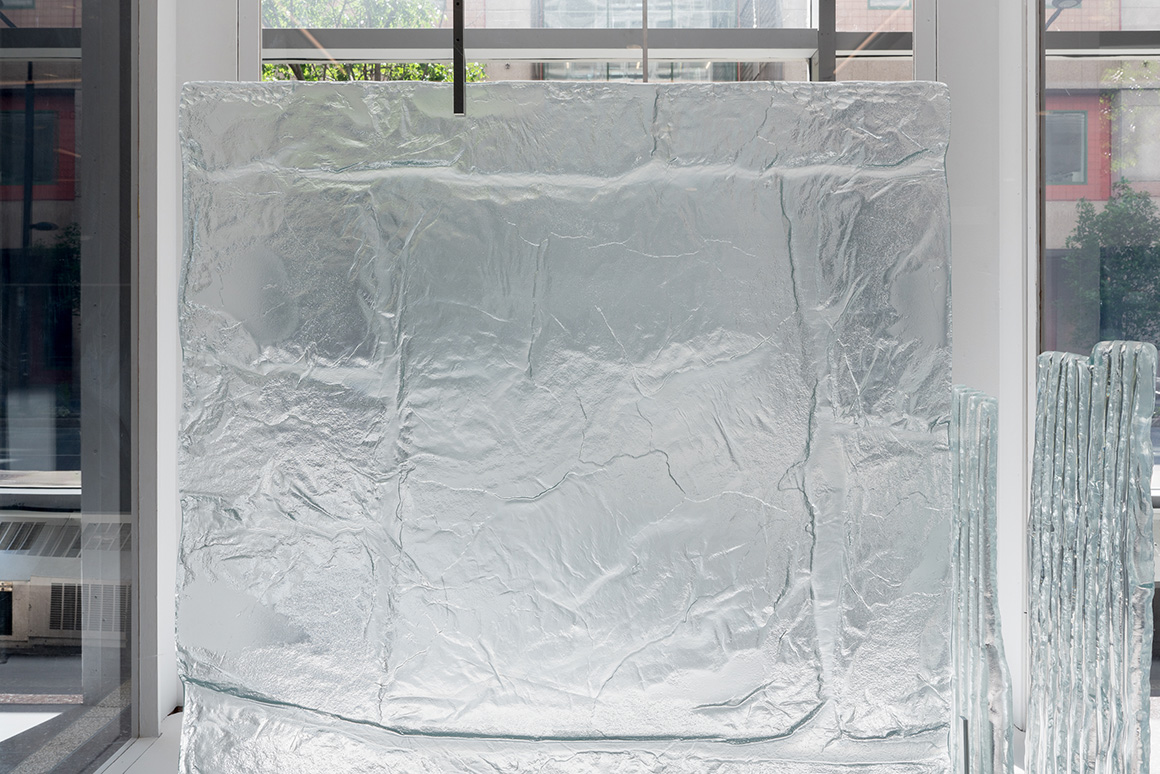
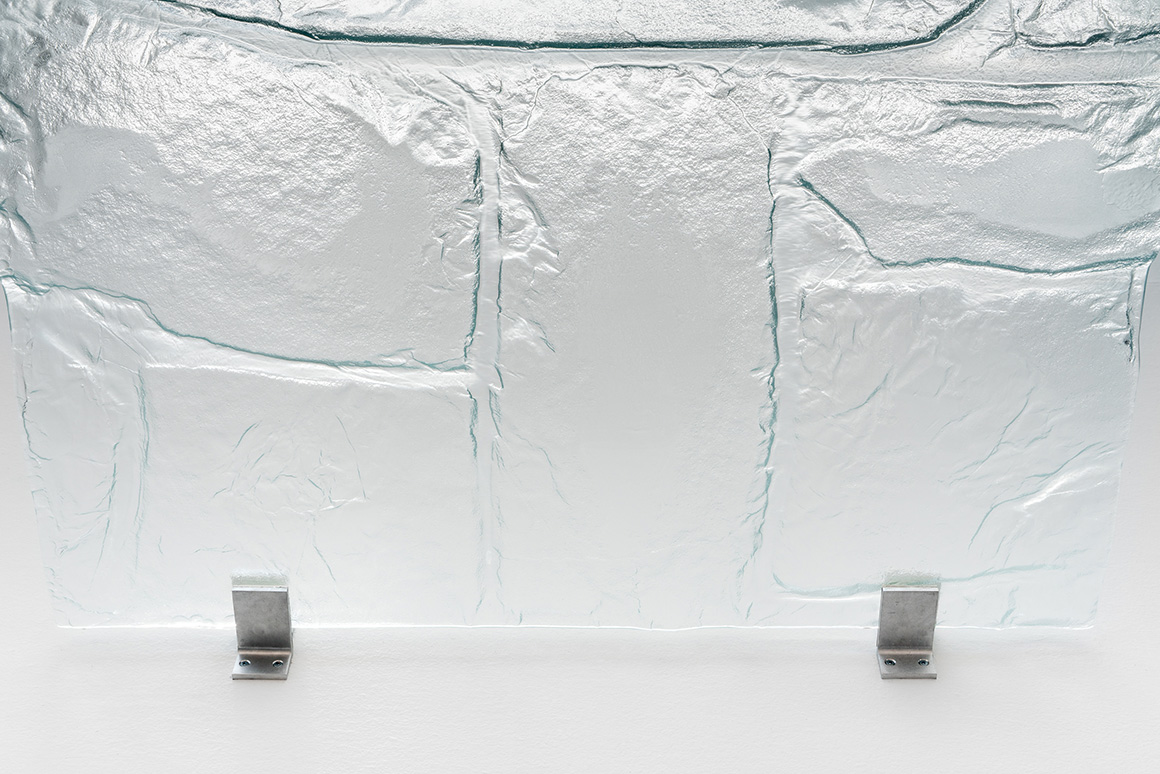
Plate glass, metal
The Wall and Its Thickness
February 26, 1970
Two hundred demonstrators—students from the University of the West Indies, trade unionists, and National Joint Action Committee (NJAC) activists—march toward the Royal Bank of Canada and the High Commission of Canada in Port of Spain’s Independence Square, to protest Canada’s economic stranglehold on Trinidad and Tobago since independence in 1962. The procession then moves to the Cathedral of the Immaculate Conception, seen as a symbol of the structure of white power in the country; black sheets are thrown over the white statues, and “Freedom Now” signs are hung from their arms. Eight people are arrested during the protests. The following week, 10,000 people—a tenth of the city’s population—take to the streets.1
March 31, 2026
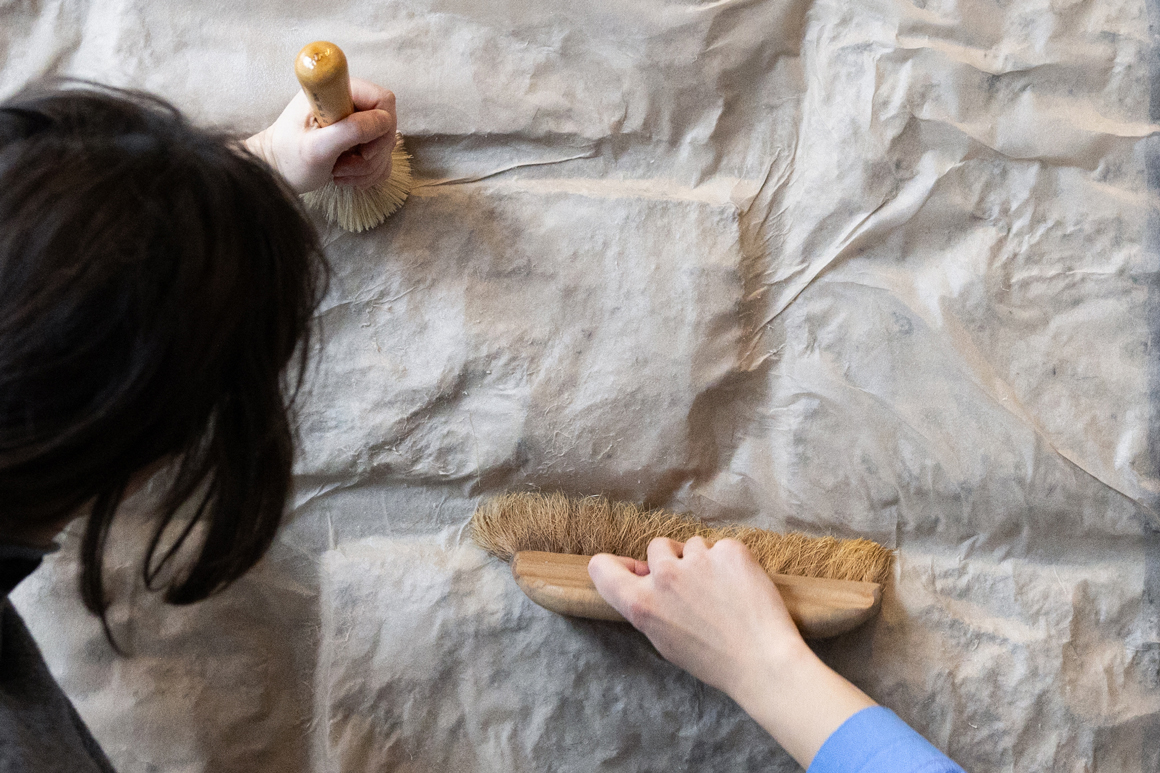
Large sheets of wet paper are plastered onto the grey stone surface of the inside wall, and then beaten with a stiff brush—a technique for transferring stone inscriptions borrowed from archaeology. While M and J press the sheets against the wall, Alexia patiently drums her brush along the stones, imprinting their texture onto the wet paper. 1997— Édouard Glissant connects ancestral memory to the idea of the trace, those paths through the Caribbean savannah etched out according to use, by feet or machetes. The trace is an ephemeral and fragile passage—if one ceases to use it, vegetation grows back up, and the trace disappears.2
February 26, 1969
In solidarity with the occupation of the Hall Building at Sir George Williams University in Montreal a few weeks earlier, students from the University of the West Indies block access to their own Trinidad campus, preventing Canada’s Governor General, Roland Michener, from speaking.3 The students are protesting the hypocrisy of Canada and its mining, oil, and petrochemical industries, whose neo-colonial ambitions for the region remain poorly hidden behind a thin veil of promises for equality and democracy.
March 31, 2026
We are walking through the Hall Building atrium. Alexia stops at one of its towering columns. She applies wet paper to the ridged surface and repeats the process, her fingers pressing the mulberry fibres into the cold, grainy grooves of the concrete. October 14, 1966 Inaugurated on the same day as the Montreal metro—twin symbols of modernity in motion—the Henry F. Hall Building is presented as the first building to house an entire university.4 Its design is intended to be a pioneering reflection of the institution’s democratic values:5 the towering glass walls promise openness and accessibility, and the modular façade in pre-stressed concrete—produced by Dutch company Schokbeton, a major player in Montreal architectural projects at the time—embodies ideals of functionality, economy, and rationality.6
March 31, 2026
In Alexia’s patient movements, I recognize her experience and expertise, but also the inevitable self-questioning that impels slowness. Those who make know full well that nothing can ever be truly predetermined. Form does not precede action; rather, it emerges from that which changes through exchange, from the interplay between forces over time. Between the forces of formed concrete and igneous rock, as well as our own forces—those of Alexia, M, J, and myself, her ad hoc assistants. Between the materiality of our tools and the fragility of mulberry fibres and wet paper under Alexia’s brush, something new and delicate is created. To make is to take action in a world of active matter, matter with which we must contend, convey, and join forces.7 The paper is finally dry, and we put away the brushes, small tools, and precious moulds that will soon give form to wet plaster, and thus to the dry plaster where supple, hot glass will come to rest.
January 15, 1969
After several months of unresolved complaints of racial discrimination against a Sir George Williams biology professor, approximately two hundred students occupy the computer centre in the Hall Building. Many are Caribbean, their political consciousness fuelled by African independence movements, the Cuban Revolution, and the writings of Frantz Fanon, C.L.R. James, and Stokely Carmichael. These students are part of an emancipation movement that had, as Alfie Roberts puts it, “a tremendous impact on what was happening here in Quebec”.8 On January 29, the fourteenth day of the occupation, riot police force open the barricaded doors to the lab. A fire breaks out. Several computers are damaged. Ninety-seven people are arrested, including Roosevelt “Rosie” Douglas and Anne Cools, two central figures in the occupation, who will face lengthy prison sentences.9
March 14, 1986
David Copperfield—famous for momentarily making the Statue of Liberty disappear—is about to walk through the Great Wall of China. As a child, I watch it all on television, mesmerized. The illusionist passes behind a white cloth stretched taut in front of the lights. His shadow seems to sink into the rock. After a few seconds of suspense, the same shadow emerges on the other side of the wall, and David leaps triumphantly from behind the veil, beaming at the camera.10 From this seamless passing-through emanates a certain image of whiteness: the constant experience of open doors—transparency as an obsession with access, immediacy, and control?
September 9, 2002
Pro-Palestinian demonstrators are forcibly removed from the auditorium and atrium of the Hall Building and out into the street. I join the hundred or so people scattered around the nearby intersection, and glean that Benjamin Netanyahu is in Montreal, but that his lecture at the university has been cancelled. Tensions are mounting in the crowd. The sound of breaking glass joins the shouting, and the smell of pepper spray fills the air. A student I recognize is filming the scene with his video camera. His documentary Discordia (2004) will portray the affair from the perspective of the students involved, emphasizing the importance of friendship, listening, and experimentation, irrespective of power struggles and media spin.11 During a press conference at the Ritz-Carlton, where he is staying, Netanyahu accuses the protesters of being anti-democracy “zealots” and advocates of terrorism.12
2024—
On the screen, images of lifeless bodies, thousands of buildings reduced to ashes, displaced men, women and children, exhausted, barely surviving among the ruins.
March 1, 2026
During a visit to the vacant lot bordering the Teatro Oficina in São Paulo, A, one of the activist-gardeners, tells us how this collaborative gardening project is a way of “de-massacring” the land, of honouring its many layers of memory: its geological history, the river that once flowed here, all those who suffered at the hands of the Brazilian slave trade—des-massacrar…
April 4, 2026
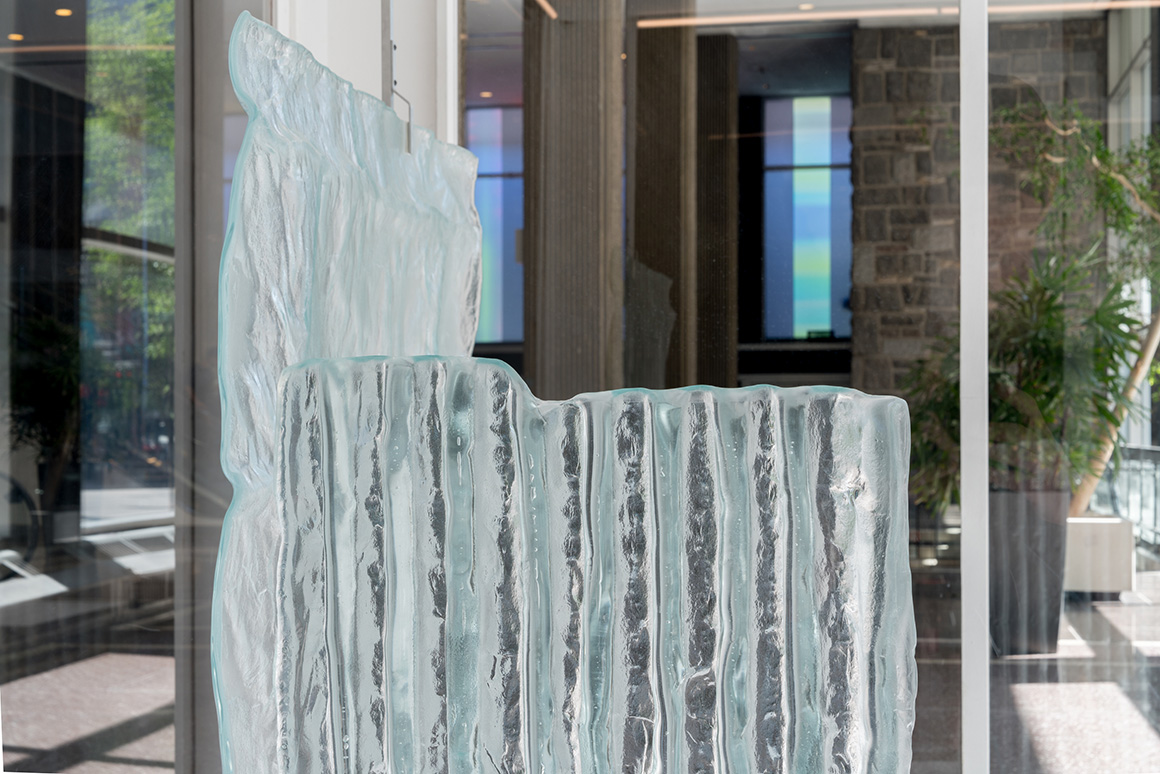
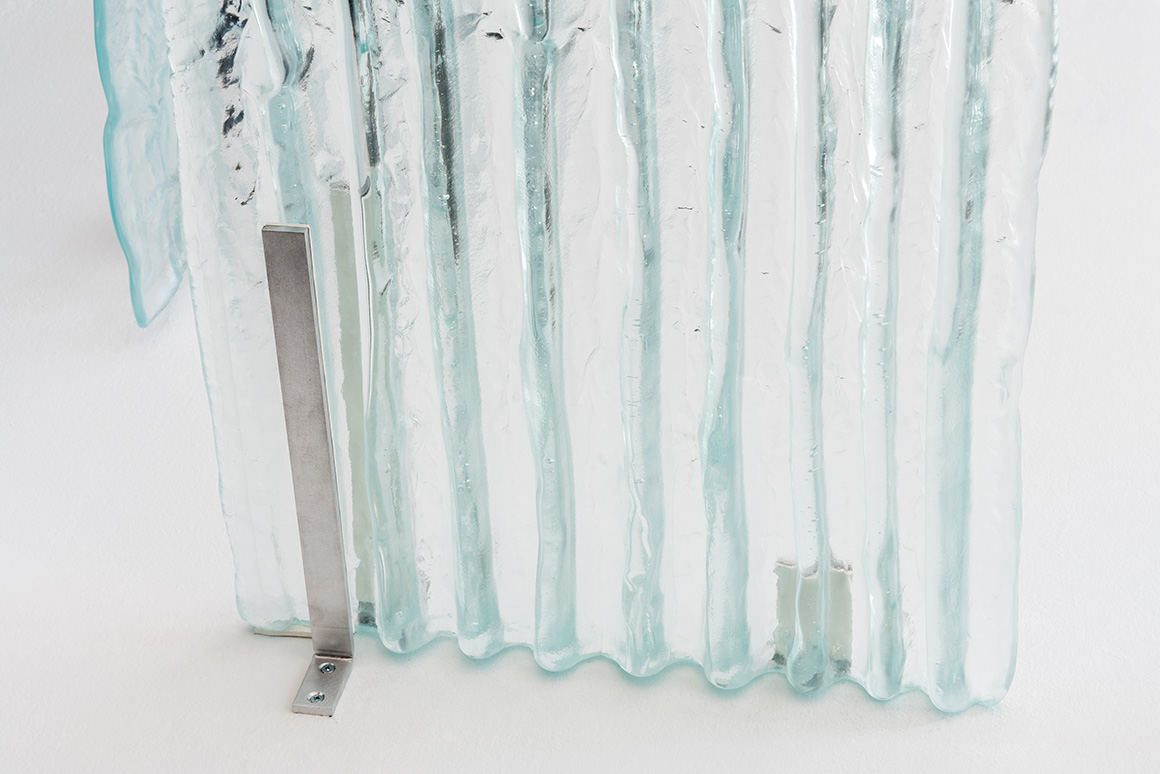
Alexia’s paper shells are carefully reinforced, layer by layer, with plaster and wet fibre. The forms are then transferred into a dry plaster mould at the bottom of a large industrial kiln. Alexia sprays water inside the kiln before gingerly placing the glass plate on the raised points of the relief.
1970—
Following the Hall Building occupation, despite solidarity from across Canada with Black students at Sir George Williams, active support gradually dissipates, and institutions and professors mostly end up backtracking. In Quebec, the affair soon disappears from the collective narrative—just another blip on the radar. This erasure is telling. With only a few exceptions, leftists in Quebec at the time, absorbed by the nationalist cause, don’t recognize the Sir George Williams occupation as part of a broader decolonization movement.13 The Quebec left fails to integrate into the narrative of the Quiet Revolution both this event, and other collective struggles and solidarity movements happening in the same streets: movements fighting gender-based discrimination,14 systemic racism and land theft,15 economic exclusion, and the profiling16 and stigmatization of racialized communities.17
April 7, 2026
The temperature will rise slowly to reach 788 degrees Celsius. Over four days, in the darkness of the kiln, hot glass will settle into the finest details of the imprint of the Hall Building. It will come to haunt this material and our memory of it, half-readable in the unevenly frosted glass.
1971—
Meetings known as “Regular Thursday Nights” begin to take shape. Initially intended to be information sessions on the arrests stemming from the occupation of the Hall Building, they will soon evolve into a permanent political forum. This vibrant context gives birth to the magazine Uhuru (“freedom” in Swahili), an essential voice of Black activism in Montreal with a circulation of 3,000 copies, similar to Parti pris at its peak. The occupation indeed creates the momentum for a renaissance among organizations in Montreal’s Caribbean and Afro-descendant communities, and will have a significant impact on other emerging activist milieux as well, whether feminist, Indigenous, or more broadly immigrant-focused.18
June 1, 2009
Far removed from the hylomorphic or form-matter model, which assumes that making necessarily imposes a form in the mind onto passive, inert matter, “to speak of establishing something is to engage with the question of modality in a way that is diametrically opposed to constructivism. To say, for example, that a fact is ‘constructed’ is unavoidably […] to designate the thinker as creator of the vector in question, not unlike the idea of the Potter God. But conversely, if we say that an artwork is ‘established’, we suggest that the Potter is not a god, but rather a person who receives, gathers, prepares, explores, invents, and discovers the form of the artwork, much as one might discover a hidden treasure.” 19
June 3, 2026
Alexia’s glass plates inhabit the space together without touching, and a kind of intensity circulates in the wall’s absence. Through her meticulous work of imprinting, displacement, and translation, these forms reach us as if following a trace, a path, a reminder, an invitation to reconnect with that which can heal in the wake of repression. The parts of memory that official history erases—friendships, the invisible work of activism, solidarities forged in urgency, everything that matter unknowingly preserves—are indeed revealed by the trace, this fragile and necessary bulwark against the brutal certainty and indifference of grand narratives.
Text by François Lemieux
Translated by Simon Brown
1 Romain Cruse, Le Mai 68 des Caraïbes (Montréal: Mémoire d’encrier, 2018), 29–30, 258–263.
2 Édouard Glissant, Introduction to a Poetics of Diversity, trans. Celia Britton (Liverpool: Liverpool University Press, 2020).
3 Romain Cruse, Le Mai 68 des Caraïbes
4 Wes Colclough, “The Henry Foss Hall Building, Montreal: From Riots to Gardens in Forty Years”, in Palimpsest III: The Dialectics of Montreal’s Public Spaces, eds. Cynthia I. Hammond and Anja Borck, Department of Art History (Montreal: Department of Art History, Concordia University, 2010).
5 Anja Borck, “Seen but ignored: Concordia University’s Henry Foss Hall,” Journal for the Study of Architecture in Canada 34, no. 2 (2009): 61–74.
6 For more on the power dynamics in the transformation of Montreal during this period: Main basse sur la ville, directed by Martin Frigon, (Films de l’OEil, 2017).
7 Tim Ingold, Making: Anthropology, Archaeology, Art and Architecture (London: Routledge, 2013), 20-21.
8 Alfie Roberts, A View for Freedom: Alfie Roberts Speaks on the Caribbean, Cricket, Montreal, and C.L.R. James (Montreal: Alfie Roberts Institute, 2005), 81-82.
9 David Austin, “All roads led to Montreal: Black Power, the Caribbean, and the Black Radical Tradition in Canada,” Journal of African American History 92, no. 4 (2007): 516–541. See also: Ninth Floor, directed by Mina Shum (National Film Board of Canada, 2015).
10 The Magic of David Copperfield VIII: Walking Through the Great Wall of China, directed by David Copperfield and Stan Harris (CBS, 1986). See also: Stephanie Kirchgaessner, Lucy Osborne, and Jules Metge, “Epstein and Magician David Copperfield Appeared to Have ‘Very Close Relationship’, Newly Released Files Say,” The Guardian, February 2, 2026.
11 Discordia, directed by Ben Addelman and Samir Mallal (National Film Board of Canada, 2004).
12 “Canada Protests Stop Netanyahu Speech,” BBC World News, September 10, 2002, http://news.bbc.co.uk/2/hi/americas/2248555.stm.
13 Sean Mills, The Empire Within: Postcolonial Thought and Political Activism in Sixties Montreal (Montreal: McGill-Queen’s University Press, 2010), 104–118. 14. Front de Libération des Femmes du Québec (FLF), Québécoises deboutte !, November 1971, https://collections.banq.qc.ca/ark:/52327/3132662.
15 An Antane Kapesh, Eukuan nin matshi-manitu innushkueu / I Am a Damn Savage; Tanite nene etutamin nitassi? / What Have You Done To My Country?, trans. Sara Kenzi (Waterloo: Wilfried Laurier University Press, 2020).
16 Maxime Aurélien and Ted Rutland, Out to Defend Ourselves: A History of Montreal’s First Haitian Street Gang (Halifax: Fernwood Publishing, 2023).
17 Viviane Namaste, Savoirs créoles : Leçons du sida pour l’histoire de Montréal (Montreal: Mémoire d’encrier, 2021).
18 Mills, The Empire Within.
19 Bruno Latour, “Sur un livre d’Étienne Souriau : Les différents modes d’existence,” 2009, http://www.bruno-latour.fr/sites/default/files/98-SOURIAU-FR.pdf.
Alexia Laferté Coutu (b. 1990) lives and works in Montreal / Tiohtià:ke / Mooniyang. Her practice revolves around processes of imprinting and transposition, processes during which forms become imbued with memory and reveal layers of time normally invisible to the naked eye. Her sculptures and installations have been shown in solo and group exhibitions, notably at Galerie Nicolas Robert, Toronto (2023), the Darling Foundry, Montreal (2022), Occurrence, Montreal (2022), Doosan Gallery, Seoul (2020), and Pangée, Montreal (2019). Recipient of the Prix Pierre Ayot (2023), Laferté Coutu studied at Concordia University, Bauhaus Universität Weimar, and Université du Québec à Montréal. Her works are part of the Caisse de dépôt et placement du Québec and Ville de Montréal collections.